
How Valerie Thomas Developed The First Digital Media Formats That Process Images For NASA
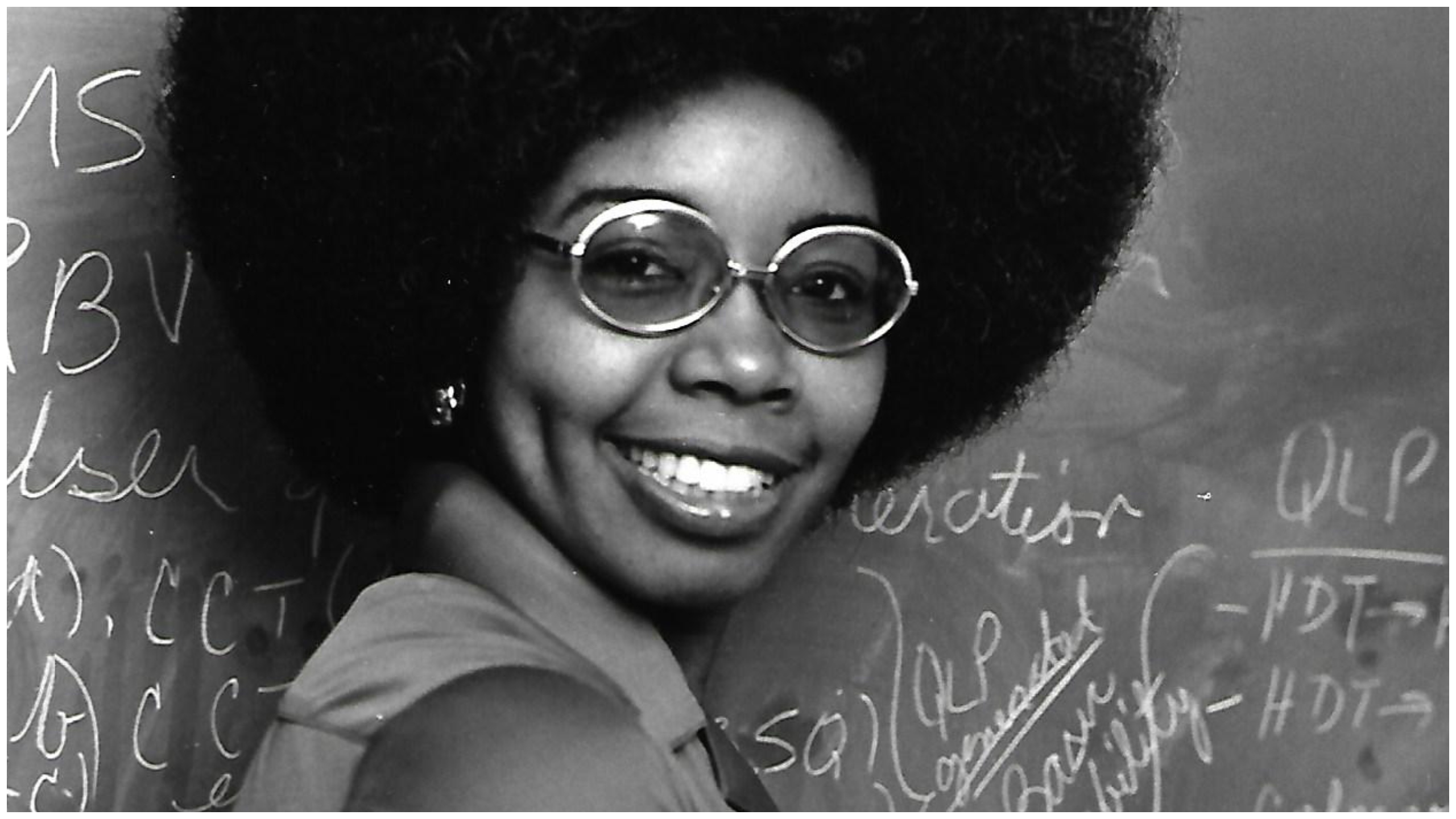
Valerie L. Thomas, a trailblazing physicist and inventor, was an integral part of the early Landsat digital image processing team at NASA.
Working at the Goddard Space Flight Center in the 1970s, she managed the development of groundbreaking software that processed and analyzed data from the first satellite to study the Earth’s resources from space.
An Early Aptitude for TechnologyBorn in Maryland in 1943, Thomas showed an innate fascination with technology from a young age. At just 8 years old, she borrowed a book on electronics, hoping her father would help her explore the projects within.
Though he did not assist her at the time, her curiosity about how things worked continued to grow.
“At the time, while the students were encouraged to do their best, scientific subjects were not necessarily considered a focus for women, and the school had just been integrated. So, no one encouraged Thomas to take the advanced math classes that were offered at her school,” said Dr. Marcus Jones, Thomas’ biographer.
Breaking Barriers in PhysicsThomas’ passion for science persisted, andshe enrolled at Morgan State Universityas one of only two women to major in physics. Her exceptional academic performance opened doors, landing her a position as a mathematical/data analyst at NASA after graduation.
“In college, I majored in physics with almost a double major in math. When I started work at NASA, I had not seen a computer except in science fiction movies,” Thomas recalled. “Since my job involved writing computer programs, I decided to learn as much as possible about computers.”
Developing NASA’s Image Processing RevolutionAt NASA, Thomasquickly made her mark, managing the development of software systems that processed the first multispectral images from the Landsat satellite. She became an expert on the “Computer Compatible Tapes” used to store Landsat imagery.
“She was one of the image processing specialists who facilitated the ambitious Large Area Crop Inventory Experiment, known as LACIE—a project that showed for the first time that global crop monitoring could be done with Landsat satellite imagery,” said NASA Landsat specialist Erin Smith.
In 1976, Thomas had an idea that would lead to one ofher most significant inventions. Inspired by an exhibit creating the optical illusion of a glowing light bulb, she became intrigued by how realistic 3D images could be transmitted.
“If it were possible to present and transmit these types of realistic, three-dimensional images, great improvements could be made in video, and even television, in the future,” Thomas said.
Four years later, she patented the Illusion Transmitter, using concave mirrors to transmit optically realistic 3D images. NASA continues to use this technology today, with potential future applications in surgery and television.
Valerie L. Thomas is an American data scientist and inventor. She invented the illusion transmitter, for which she received a patent in 1980. She was responsible for developing the digital media formats that image processing systems used in the early years of NASA's Landsat…pic.twitter.com/CfZ1g2lGjO
— Imtiaz Mahmood (@ImtiazMadmood)February 10, 2024Mentoring and AwardsThroughout her impressive career at NASA until her retirement in 1995, Thomas received numerous awards, including the GSFC Award of Merit and the NASA Equal Opportunity Medal. She remains committed to mentoring young STEM students and encouraging women to pursue scientific fields.
“There are special STEM programs in which girls are participating, books for girls about female role models, and hands-on competitions and other activities in which girls are being successful,” Thomas said. “I think strides have been made to encourage more females to consider entering science and engineering.”

