
Laila Edwards Makes Olympic History as First Black Woman on U.S. Women’s Hockey Team for Milan Cortina 2026
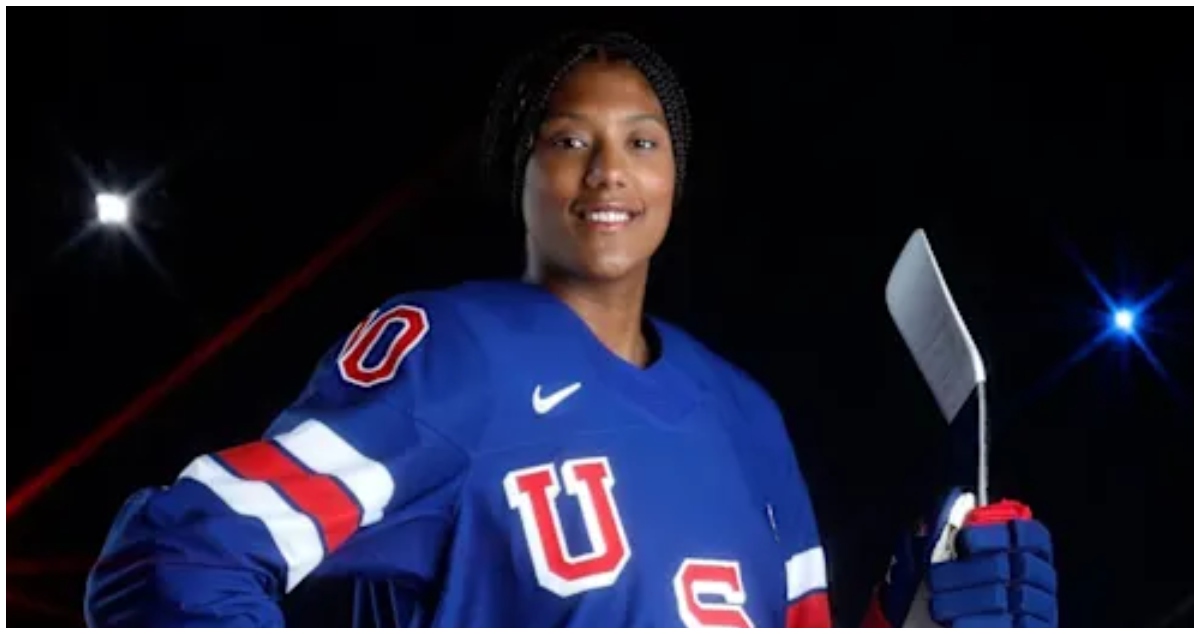
A living room wall in Cleveland Heights, Ohio, tells a story. It’s marked with black puck scars from childhood games. That home now belongs to an Olympian. More importantly, it belongs to Laila Edwards. The 22-year-old senior forward for Wisconsin has shattered a barrier. She is the first Black woman ever selected to the U.S. Women’s National Hockey Team for the Olympic Games. Her selection for the Milan Cortina 2026 Olympics is a historic moment for the sport.
Edwards earned her spot with standout play. She has two national championships with Wisconsin. She also helped Team USA win two world championship medals. At 6-foot-1, she’s a dominant force on the ice. Surprisingly, she will play defense for Team USA at the Olympics. This move highlights her versatile skills. Coach John Wroblewski supported her bold position switch. He believes her vision and reach will be major assets.
The Family Foundation and Early Hockey Roots
Laila’s journey started in that living room. She played intense rollerblade hockey with her siblings. “They were scratching up the floors, but they had so much fun,” says her mother, Charone Gray-Edwards. Her father, Robert Edwards, had a childhood hockey interest. He advocated fiercely for his children. The local Cleveland Heights Community Center became their gateway. It was a familiar place in a progressive suburb. Both Laila and her sister, Chayla, started in figure skating there. They soon traded tutus for pads.
Hockey became the family’s life. They watched games nightly and idolized players like Alexander Ovechkin. Laila’s talent was obvious early on. She played on boys’ travel teams by age eight. Her brother, Bobby, recalled a clinic where a young Laila dazzled older players. “She would just be standing on the boards… then — boom, boom, boom — and it was all over,” her mother remembered. However, this path meant entering spaces where she often stood alone.
Navigating a Non-Traditional Path and Finding Community
Playing high-level youth hockey presented challenges. Edwards faced racial slurs from opponents. “I was like, ‘I didn’t do anything wrong. I was born this way,’” she recalls. The family’s commitment deepened. Tournament travel replaced vacations. “Now we’re missing Easter dinner because we’re in Brampton, Canada,” Gray-Edwards said. To pursue elite hockey, Laila left home at 13 for Bishop Kearney High School in New York. It was a hockey powerhouse that recruited her.
Life at boarding school was a major adjustment. She was a Black girl away from home for the first time. Teammates came from different socioeconomic backgrounds. “It’s like you go from that and then you leave to go to the rink and boom, nobody looks like you,” Edwards said. With support from staff like director Cari Coen, she found her community. She also grew into her towering frame, which coaches learned to utilize brilliantly on both offense and defense.
Wisconsin Development and Embracing a Historic Role
Choosing the University of Wisconsin was a natural step. Its legendaryprogram checked every box.It also reunited her with her sister, Chayla. Together, they navigated life as Black athletes at a predominantly white institution. People often confused them despite their height difference. They faced microaggressons but leaned on each other. On the ice, Laila blossomed. She led the nation in goals last season and was a Patty Kazmaier Award finalist.
Edwards fully understands the weight of her historic Olympic selection. “I’m extremely, extremely grateful,” she says. She embraces being a role model. After games, children, especially kids of color, rush to meet her. “I’ve had kids say, ‘You’re my favorite player. You look like me,’” she shares. Her family sees the impact firsthand, meeting fans who travel just to see her play. For Edwards, this visibility is a responsibility she holds with pride.
A New Position and the Future of Team USA
The decision to play defense for the Olympics was her own. She approached coaches with the idea last summer. “She had a conviction in her eyes,” said Coach Wroblewski. He compared her potential impact to star NHL defensemen. The move allows her to control the game’s flow more. While unusual, Wroblewski stresses it’s not permanent. He calls her “an amazing predecessor” in a new wave of talent for Team USA.
Edwards is part of a young core that will lead after veterans retire. She is already mentoring the next generation. She advises younger Black players like Chloe Brinson and Chyna Taylor. Off the ice, she’s a self-proclaimed Netflix fiend who lovesGrey’s Anatomyand Beyoncé. She even has an “GR8” tattoo for her hero, Alex Ovechkin. As she heads to Milan, those puck marks on the wall in Cleveland symbolize where it all began. Now, Laila Edwards is ready to make her mark on Olympic history.

